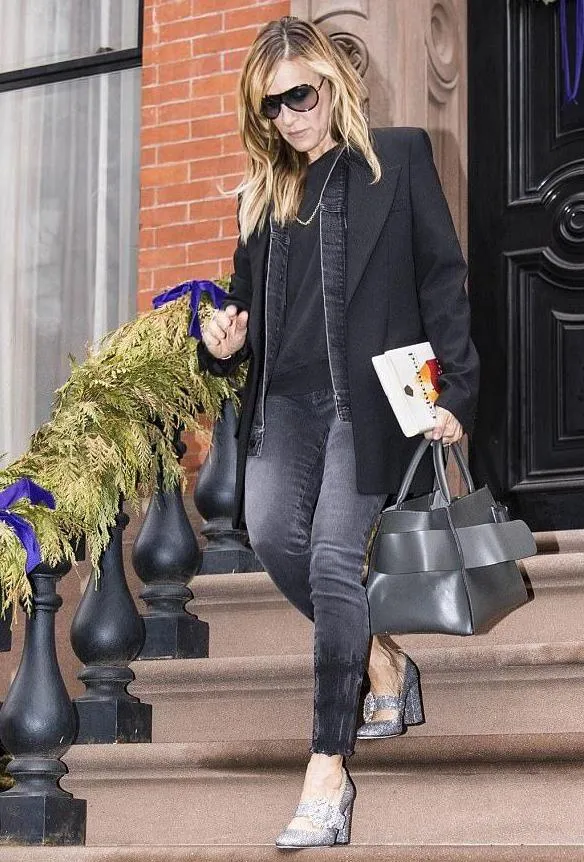
Beyond the First Love: Building a Considered Collection of Lifetime Bags

Photo by Photo by Barney Goodman on Unsplash on Unsplash
There is a comforting myth in the world of enduring accessories: that somewhere out there exists a single bag so perfectly judged — so right in scale, colour and temperament — that no other will ever be required. Buy it once, care for it well, and your handbag story is complete.
It is a lovely idea. It is also, for most of us, untrue.
The Case Against the Singular Ideal
A bag built to last a lifetime will, by definition, accompany you through many different lives. The woman who buys her first serious piece at twenty-eight, ahead of a new job in Manchester, is a different person by forty-five: perhaps a parent, perhaps running her own practice, certainly carrying more — or less — than she once did. A single silhouette cannot gracefully absorb a decade of school runs, board meetings, weddings in the Cotswolds and weekends in Whitstable.
The honest answer is not a wardrobe stuffed with impulse purchases, but a small, deliberate collection — two, perhaps three pieces — each with a clearly defined role. Think of it less as accumulation and more as an appointment book: one bag for the working week, one for evenings and occasions, one for the days that demand everything at once.
When a Second Bag Is Justified
We would never encourage wanton spending. A second investment piece is defensible only when it answers a need your first cannot. Ask yourself:
- Is there a recurring gap? If you regularly transfer your essentials into a canvas tote for the commute and back again, that friction is a signal. A second structured bag, sized for the office, removes the daily shuffle.
- Does the occasion outgrow the bag? A beautiful everyday piece may be too casual for a funeral, a christening or a black-tie dinner in Mayfair. Occasions deserve a bag that rises to them.
- Has your carrying changed? A laptop, a change of shoes, a child's emergency kit — life has a habit of expanding, and your collection should be permitted to expand with it, once, sensibly.
If none of these apply, the wisest purchase is no purchase at all. Patience is a form of good taste.
Avoiding Duplication: The Complement Test
The commonest mistake is buying the same bag twice in a different colour. It feels safe; it is, in truth, a confession that the first purchase was never quite right. Before committing to a second piece, hold it up against your existing collection — mentally, or literally in front of the mirror — and apply the complement test:
- Different scale. If your first bag is a roomy shoulder style, let the second be compact and handheld.
- Different structure. Pair a soft, slouchy everyday piece with something architectural that holds its line.
- Different strap logic. If one is carried on the shoulder, let the other be a top-handle or crossbody. Each should change how you move through a day.
- Different formality. One should be at ease with denim and a raincoat; the other, with a evening dress and no umbrella.
A collection that passes this test works like a well-edited wardrobe: fewer pieces, more combinations.
The Art of Rotation
Owning several enduring bags imposes a small duty: none should sit forgotten at the back of a cupboard. Leather, like a good coat, prefers gentle use. Rotate with the seasons — the structured piece through autumn and winter, the lighter tote from spring onwards — and stuff each with tissue paper while it rests, stored in its dust bag away from radiators and direct sunlight.
Rotation also serves a subtler purpose: it keeps your relationship with each bag honest. A piece carried constantly will reveal, within months, whether its comfort and proportions truly suit you. A piece carried occasionally earns its keep precisely because it is reserved.
A Collection Worth Inheriting
There is a final argument for the considered second purchase. A single heirloom is a treasure; a small collection of complementary pieces, each chosen with intent and each documented — receipts, care records, the story of where it was bought — is a legacy. Passed to a daughter, a niece or a dear friend, such a collection offers choice as well as beauty: the recipient may select the bag that suits her life, not merely the one that suited yours.
One perfect bag is a pleasing fantasy. Two or three considered ones, each with a purpose and a future, is rather better — a quiet, practical form of elegance that lasts, appropriately, forever.