A Bag for the Next Generation: Building an Heirloom Worth Inheriting
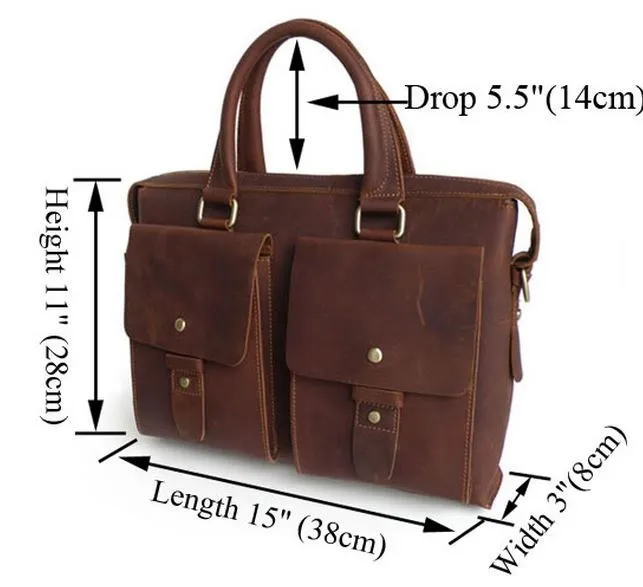
Photo: Gemoutlook, CC BY-SA 4.0, via Wikimedia Commons
There is a particular pleasure in imagining a handbag outliving you. Not in a morbid sense — merely in the quiet satisfaction of knowing that the piece you carry today might, forty years hence, be fastened by a granddaughter on her way to a job interview. Very few purchases offer this possibility. Fewer still deserve it.
The heirloom handbag is a demanding category. It asks for considered construction, honest materials and, crucially, a design that will not date before the leather has had time to develop its patina. Here is how to identify one, and how to prepare it for the long road ahead.
Start With the Hide, Not the Label
If a bag is to survive half a century of daily use, the leather itself must be up to the task. Full-grain leather — the outermost layer of the hide, left intact rather than sanded and corrected — is the only sensible starting point. It is the strongest part of the skin, and it bears the natural markings that make each bag unique. Over decades, it develops a depth of colour that no factory finish can replicate.
Top-grain leather is perfectly serviceable, but it has been corrected and coated, which limits how gracefully it ages. Bonded leather, composed of leather scraps bonded with adhesive, should be regarded as a non-starter for anything you hope to pass on. It is, to put it kindly, a material with a shelf life.
Vegetable tanning also earns its place here. Chrome tanning is faster and cheaper, but vegetable-tanned leather ages with character and can be restored far more readily by future generations of craftspeople.
Hardware That Outlives Fashion
A bag's weakest points are almost always its fittings. Zips fail, clasps snap, feet fall off. When assessing heirloom potential, examine the hardware with a jeweller's scepticism.
Solid brass and stainless steel are the gold standards; both resist corrosion and can be polished back to brilliance. Plated hardware, by contrast, will eventually wear through to the base metal beneath, and replating is neither cheap nor easy. Check that the zip runs smoothly without catching, that the clasps close with a satisfying, weighted click, and that any stitching around stress points — handles, straps, corners — is tight, even and ideally saddle-stitched rather than machine-locked.
A bag with replaceable hardware is a bag with a future. A bag with hardware riveted into unlined leather is a bag living on borrowed time.
Choose a Shape That Refuses to Date
An heirloom must be carried in every decade of its life, which means the silhouette matters as much as the materials. Logo-heavy designs, novelty shapes and trend-driven proportions age faster than their owners. The pieces that endure are those with quiet architecture: a structured top-handle, a soft hobo with clean lines, a well-proportioned shoulder bag with minimal ornamentation.
Ask yourself a simple question: if you saw this bag on a stranger in 2045, would it look dated or distinguished? The best candidates — think of the enduring appeal of a boxy flap bag or a simple tote — look distinguished. That is no accident. These shapes have already survived several generations of fashion's churn.
The Preparation: Conditioning, Storing, Restoring
A bag does not become an heirloom simply by being well made. It must be maintained, and this is where most good intentions falter.
Conditioning. Leather is skin, and skin dries out. Twice a year — we suggest the change of the clocks as a handy reminder — clean the leather with a pH-neutral cleaner and work in a quality conditioner using a soft cloth. Test any product on an inconspicuous patch first, and never apply conditioner to a dirty bag; you will simply seal the grime in.
Storing. Keep the bag stuffed with acid-free tissue paper to hold its shape, stored in its dust bag — never in plastic, which traps moisture and encourages mould. Store upright in a cool, dark cupboard away from radiators. British central heating is remarkably efficient at cracking leather.
Restoring. Scratches, scuffs and faded edges are not failures; they are invitations. A reputable leather repairer can re-dye faded panels, replace worn linings and rebuild corners. Budget for professional restoration every decade or so. It is a modest sum against the alternative — a cracked, dried-out bag consigned to a landfill site, its heirloom potential squandered.
The Final Inheritance
Perhaps the most important preparation is documentation. Keep the original receipt, care cards and any repair records in a folder alongside the dust bag. A future owner who knows what the bag is made of, and how it has been cared for, is far more likely to continue that care.
An heirloom handbag is, in the end, a conversation across time. Choose well, maintain faithfully, and the bag you buy this winter may still be turning heads when your daughter's daughter picks out her first proper handbag. That is not sentimentality. That is value, properly measured.