Restoration, Not Replacement: The UK Workshops Bringing Bags Back to Life
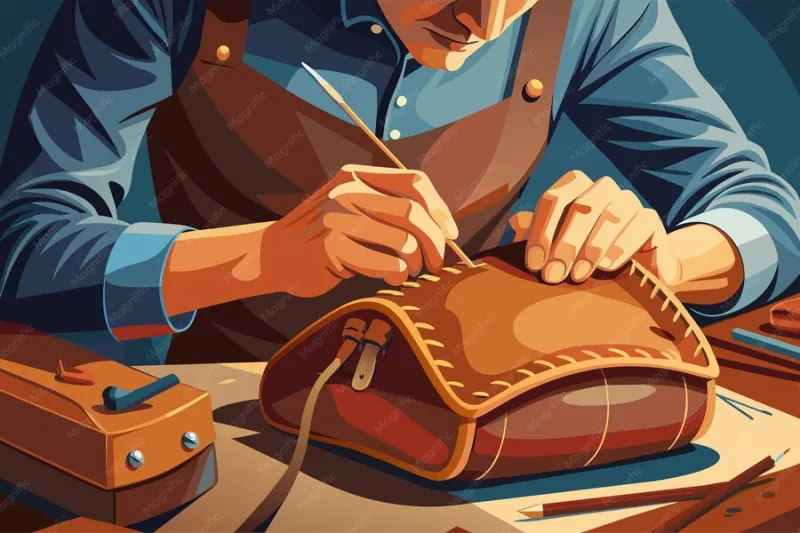
Photo: leather craftsman repairing handbag workshop tools, via img.freepik.com
There is a particular satisfaction in carrying a bag that shows its history. A softened corner, a patina deepened by a decade of daily use — these are the marks of a companion, not a casualty. But even the finest leather goods require expert attention eventually, and knowing where to turn is half the battle.
We have assembled a guide to Britain's most trusted restorers, from discreet London ateliers to family-run regional workshops, together with an honest assessment of what repairs cost and when they make financial sense.
Why Repair Beats Replacement
A quality handbag — one with full-grain leather, reinforced stitching and solid hardware — is built on a frame that rarely fails. What does wear out is everything around it: the lining that frays after years of keys and compacts, the colour that fades along the handle, the zip that finally gives up. These are all fixable, and fixing them costs a fraction of buying new.
There is also the question of sentiment. A bag inherited from a mother or bought to mark a milestone cannot simply be re-purchased. Restoration preserves the object and its story alike.
London Ateliers: The Specialist Tier
The capital remains the centre of gravity for high-end restoration in the UK.
The Leather Surgeons (Mayfair) — Arguably the most prestigious name in luxury bag restoration. They handle everything from full re-linings on structured classics to complete colour changes. Expect £180–£400 for a re-lining and £150–£300 for colour restoration on a medium-sized bag. Turnaround is typically four to six weeks.
Handbag Clinic (Central London and postal service) — A strong option for designer pieces, offering cleaning, edge painting and hardware replacement. Minor refurbishment starts around £60, with more involved work in the £150–£250 range. Their postal service makes them accessible nationwide.
Timpson's premium counters — For straightforward jobs such as zip replacement, strap stitching or a new clasp, many high-street branches offer surprisingly competent work from £15–£50. Not every branch handles fine leather, so ask before committing.
Regional Workshops Worth the Journey
Outside London, some of the country's most skilled craftspeople work quietly in smaller towns.
The Restoration Room (Manchester) — Highly regarded for colour repair on scuffed corners and faded panels, typically £80–£160 per bag. Their work on aniline leathers is particularly strong.
Edinburgh Leather Repairs — A dependable Scottish option for handle wrapping, re-stitching and general servicing, with most jobs between £40 and £120.
Willow & Co (Bristol) — A small workshop favoured by vintage enthusiasts. Excellent at rescuing older pieces where parts are no longer manufactured, including sourcing or fabricating replacement feet and clasps.
Northampton's shoemakers — It should come as no surprise that the home of British shoemaking harbours exceptional leather skills. Several Northampton workshops take bag commissions and repairs; a handle re-wrap might cost £50–£90.
What Each Repair Typically Involves
Understanding the work helps you judge the quote.
- Re-lining — The interior fabric is removed and replaced, often with suede or cotton canvas. £120–£300 depending on size and complexity.
- Colour restoration — Cleaning, re-dyeing and sealing. £80–£250. Best for even fading rather than deep stains.
- Hardware replacement — Zips, clasps, feet and D-rings. £20–£90. Simple and transformative when a zip fails.
- Handle re-wrapping or replacement — £50–£150. Handles take the most abuse of any component.
- Edge painting — £40–£100. Restores the painted edges that fray along flaps and straps.
- Deep clean and conditioning — £40–£80. The single best-value service, recommended annually for frequently used bags.
When Repair Is Worth It — and When It Is Not
A useful rule: if the repair costs less than a third of the bag's current replacement value and the structure is sound, proceed. A £60 zip replacement on a bag worth £800 is a straightforward decision.
Conversely, be wary of the following:
- Cracked or rotted leather throughout — when the hide itself has degraded, re-dyeing merely delays the inevitable.
- Structural frame damage — a bent or broken frame on a structured bag can exceed the value of the repair.
- Mould that has penetrated the leather — surface mould can be treated; embedded mould cannot be fully reversed and will return.
Finally, choose a restorer who will tell you when to stop. The best craftspeople decline work that will not endure — and that honesty is precisely what you are paying for.
Caring for the Bag Between Repairs
Prevention reduces the frequency of interventions. Store your bag stuffed with acid-free tissue in a dust bag, away from radiators and direct sunlight. Condition the leather twice a year. Empty pockets weekly — the weight of coins is the quiet enemy of bag bases.
A forever bag is not one that never needs attention. It is one that, with the right hands at the right moments, will outlast every trend that comes and goes.